
India’s residential rooftop solar market has 132 GW potential: ISMA
By Staff Report September 18, 2026 12:54 pm IST
The priority now is to accelerate deployment through faster conversion of registrations into installations, timely subsidy disbursement, utility-led aggregation, wider adoption of group and virtual net metering, and targeted investments to address distribution transformer hosting constraints.
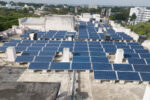
India’s residential rooftop solar market could scale to around 132 GW by 2030 from the current 17 GW of installed capacity, with annual installations projected at 9–15 GW between 2026 and 2030, according to the Indian Solar Manufacturers Association (ISMA) report, ‘Residential Rooftop Solar Market: Market Sizing and Growth Outlook’.
The report states that India has installed 17GW of rooftop solar capacity, leaving another 115 GW of potential untapped. This presents an opportunity for domestic manufacturing of solar cells, modules, inverters and balance-of-system components.
India’s residential rooftop solar market has entered a phase of sustained scale-up. The priority now is to accelerate deployment through faster conversion of registrations into installations, timely subsidy disbursement, utility-led aggregation, wider adoption of group and virtual net metering, and targeted investments to address distribution transformer hosting constraints.
The report’s key finding is the Affordability Effect, which shows that rooftop solar adoption has expanded far beyond states where the residential rooftop solar market is commercially viable on its own.
It indicates that the PM Surya Ghar Muft Bijli Yojana is bringing India’s largest and lowest-priced power markets within reach, as deployment data show around 60 percent of the capacity installed under the campaign sits in states where rooftop solar would not yet pay for itself unaided.
The continued emphasis on net-metered systems as a key enabler of residential adoption under PM Surya Ghar, together with annual settlement and the gradual adoption of group and virtual net metering across states, has expanded the accessibility and financial attractiveness of rooftop solar for residential consumers.
The government has also expanded access to financing options for residential rooftop solar systems, lowering upfront costs and improving affordability through flexible repayment mechanisms. Central Financial Assistance for residential rooftop systems is now front-loaded and capped: ₹30,000 for the first kW, ₹60,000 for 2 kW and ₹78,000 for systems of 3 kW or larger.
PM Surya Ghar Muft Bijli Yojana has emerged as a key driver of residential rooftop adoption, while also supporting demand for domestically manufactured DCR modules, creating business opportunities across the rooftop solar value chain – including manufacturers, EPC companies, installers, system integrators and other service providers as well as contributing to employment generation across the ecosystem. A clear transition, including consideration of PM Surya Ghar 2.0, would provide the visibility needed for consumers and stakeholders across the rooftop solar ecosystem to plan investments, strengthen domestic supply chains and sustain the growth achieved under the current programme.
Cookie Consent
We use cookies to personalize your experience. By continuing to visit this website you agree to our Terms & Conditions, Privacy Policy and Cookie Policy.