The next phase of PM-KUSUM is Agriovoltaics: Pralhad Joshi
By Staff Report September 10, 2026 12:00 pm IST
The focus will be on small and marginal farmers, farmer producer organisations, cooperatives and panchayats, while ensuring that land ownership remains with the farmer.
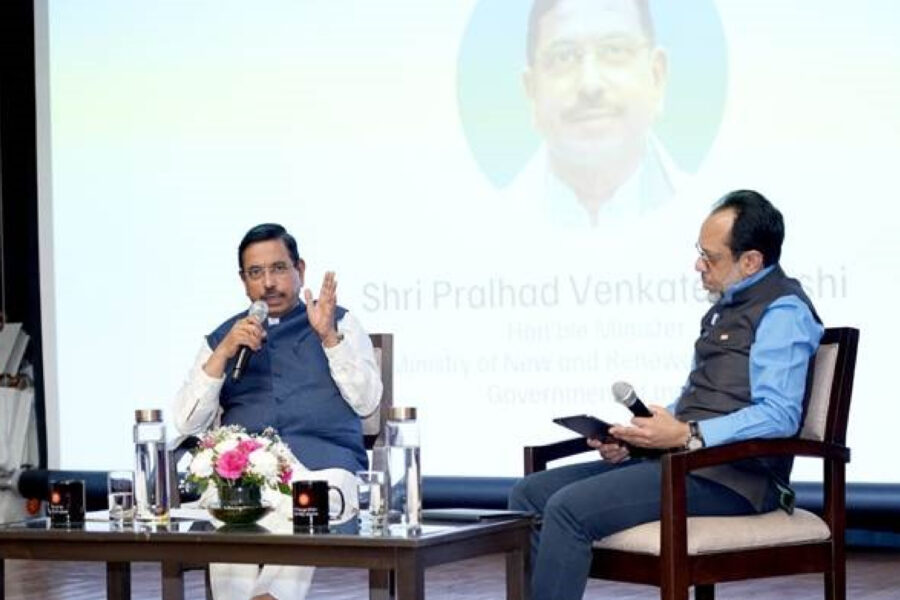
Union Minister for New and Renewable Energy Pralhad Joshi stated that the farmer who has always fed this nation is now also lighting it up, with the Annadata becoming an Urjadata, while addressing the curtain-raiser event ahead of the 7th Agrivoltaics World Conference 2026 in New Delhi.
The next phase of PM-KUSUM is set to carry a component dedicated to agrivoltaics, enabling farmers to continue farming while also earning from electricity. The focus will be on small and marginal farmers, farmer producer organisations, cooperatives and panchayats, while ensuring that land ownership remains with the farmer.
The farmer can earn three streams of income from the same acre — from the crop sold, the power sold to the DISCOM and the money saved on diesel. For a small farmer, solar income is not just extra income; it is security. Solar income can provide greater income security to farmers whose earnings are otherwise dependent on monsoons and market prices, providing a regular source of income in both good years and bad years
The Minister noted that India has about 18 percent of the world’s population but 2.4 percent of the world’s land, with more than 85 percent of farmers being small and marginal farmers cultivating less than 2 hectares. With agrivoltaics, he said, we do not have to choose between crops and solar plants; we can do both at the same time. The same land can continue to grow crops below, while generating clean energy above.
The Minister said India added 55.29 GW of non-fossil capacity last year, more than the entire installed power capacity of several developed countries.
Joshi highlighted the progress under PM-KUSUM, stating that around 29 lakh pumps have been solarised. He added that last year, decentralised solar contributed 16.3 GW, comprising 7.6 GW from PM-KUSUM and 8.7 GW of rooftop solar, largely under PM Surya Ghar Muft Bijli Yojana, which is touching 5.6 million beneficiaries.
The Union Minister highlighted the need for more research on Agrivoltaics to understand what works best for different crops, climates and regions. He gave the example of BAIF’s Rural Innovation Centre in Pune where researchers are testing 17 solar configurations across 30 crops, underscoring the importance of finding the right combination of crop, panel height, spacing, tracking system and business model for each farming condition.
Joshi urged stakeholders, including industry and innovators, to focus on structures that allow tractors and harvesters to move freely and withstand local weather conditions, crop-wise and region-wise data generation by ICAR, agricultural universities and Krishi Vigyan Kendras, and innovation in structures, materials and mounting systems to narrow the cost gap with conventional solar. He said India is already building village-level skills and has trained almost 70,000 Surya Mitras.
The Minister said India’s experience in agrivoltaics can be particularly relevant to the Global South, where farms have small holdings, abundant sunshine and grids that are still catching up. He said India’s scale provides an opportunity to develop affordable and practical solutions that can be replicated across the Global South.
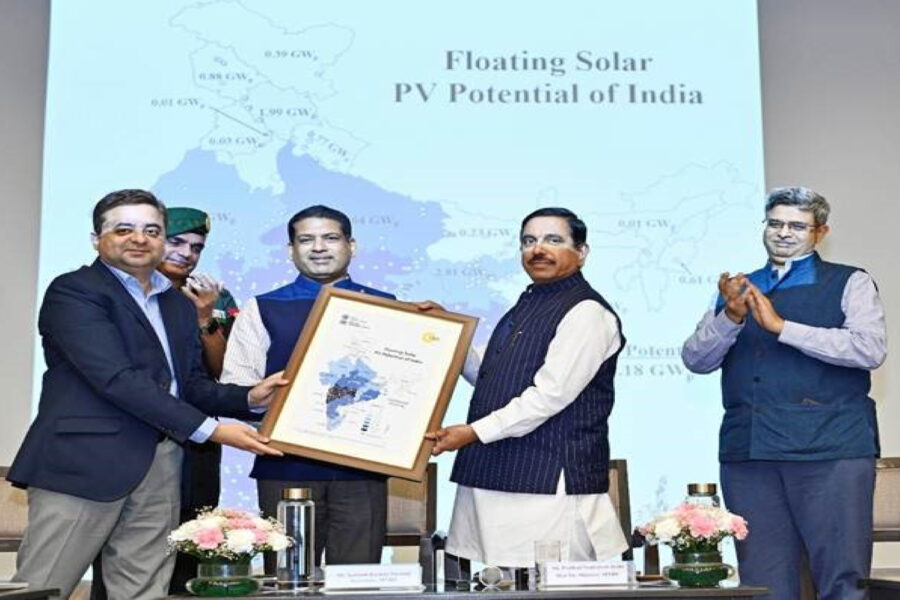
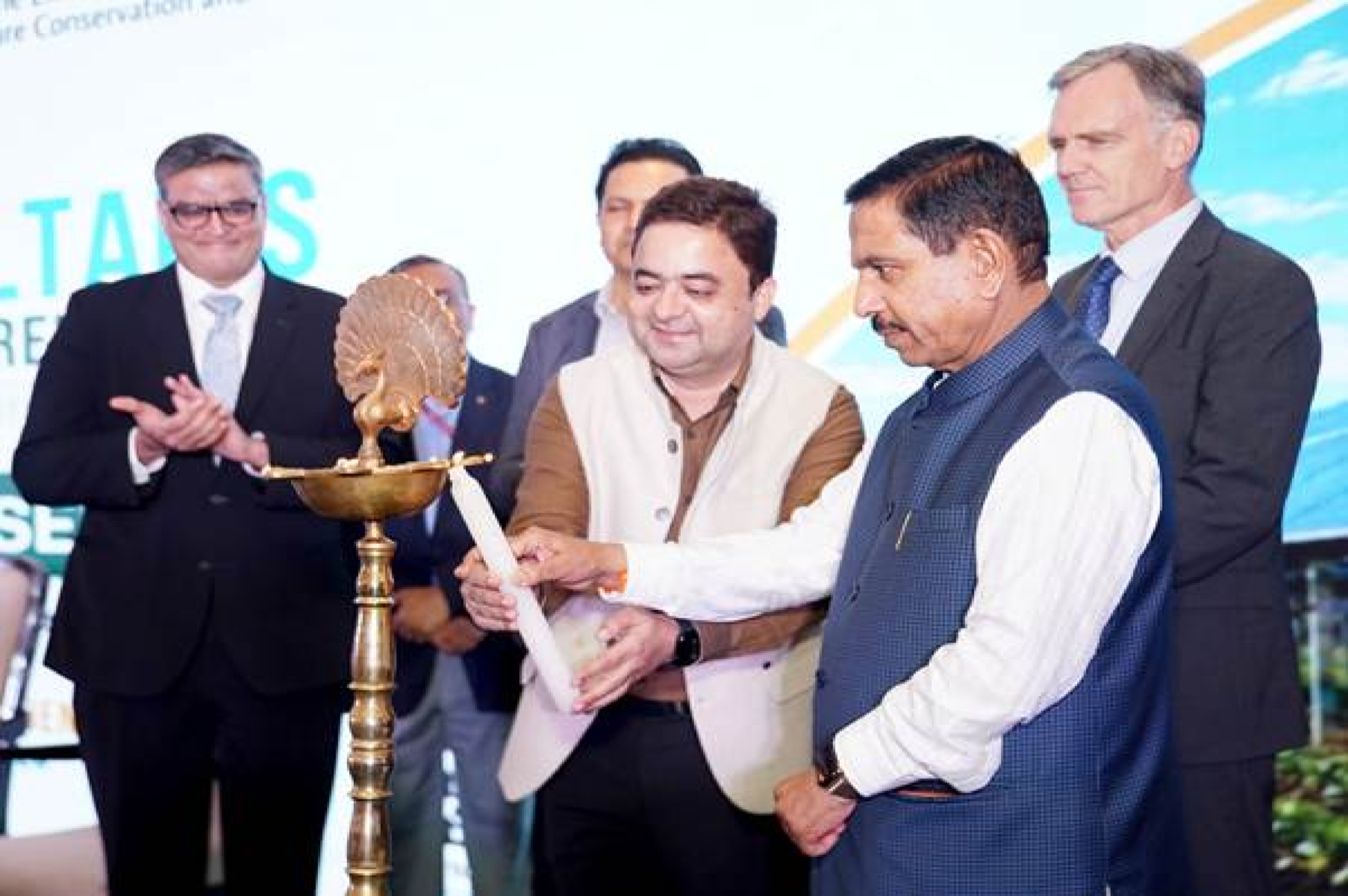
During the Curtain Raiser, the Union Minister also launched the teaser of the 7th Agrivoltaics World Conference 2026 along with the unveiling of the official Conference logo. The Agrivoltaics Pitch Hub on the theme “Fueling Farm to Fork Innovations” was also announced with the National Solar Energy Federation of India (NSEFI) as the knowledge partner. Built around the 3F framework of Food, Fuel and Fibre, the Pitch Hub will invite innovative solutions that can contribute to the future of agrivoltaics.
The Conference is expected to provide an important platform for global and national stakeholders to exchange experiences, foster partnerships and identify practical pathways for integrating agriculture and solar energy. It will seek to advance farmer-centric, sustainable and scalable agrivoltaics solutions while strengthening India’s role in shaping the global discourse on the sector.
Cookie Consent
We use cookies to personalize your experience. By continuing to visit this website you agree to our Terms & Conditions, Privacy Policy and Cookie Policy.