
Energy companies rethink workforce design for inclusion
By Staff Report October 15, 2026 7:54 pm IST
At the Energy of Inclusion DEIB Roundtable 2026, organised by Apraava Energy and Avtar, industry leaders discussed how technology, shift planning and greater employee autonomy could help companies address workforce challenge.
India’s energy sector faces a workforce challenge that goes beyond hiring more diverse talent: redesigning site-based jobs to make them sustainable for employees while meeting the demands of continuous operations. At the Energy of Inclusion DEIB Roundtable 2026, organised by Apraava Energy and Avtar, industry leaders discussed how technology, shift planning and greater employee autonomy could help companies address this challenge without undermining safety, productivity or cost efficiency.
Rethinking the structure of site-based work
Energy facilities often operate in remote locations where employees must be physically present for maintenance, inspections and emergency response. Although digital systems are reducing the need for some routine interventions, they cannot eliminate the requirement for on-site personnel.
SCADA platforms allow operators to monitor plant performance remotely, while AI-enabled dashboards can help identify equipment conditions and support maintenance decisions. These capabilities offer opportunities to organise work more efficiently, but their effectiveness also depends on how companies allocate responsibilities and schedule employees around operational requirements.
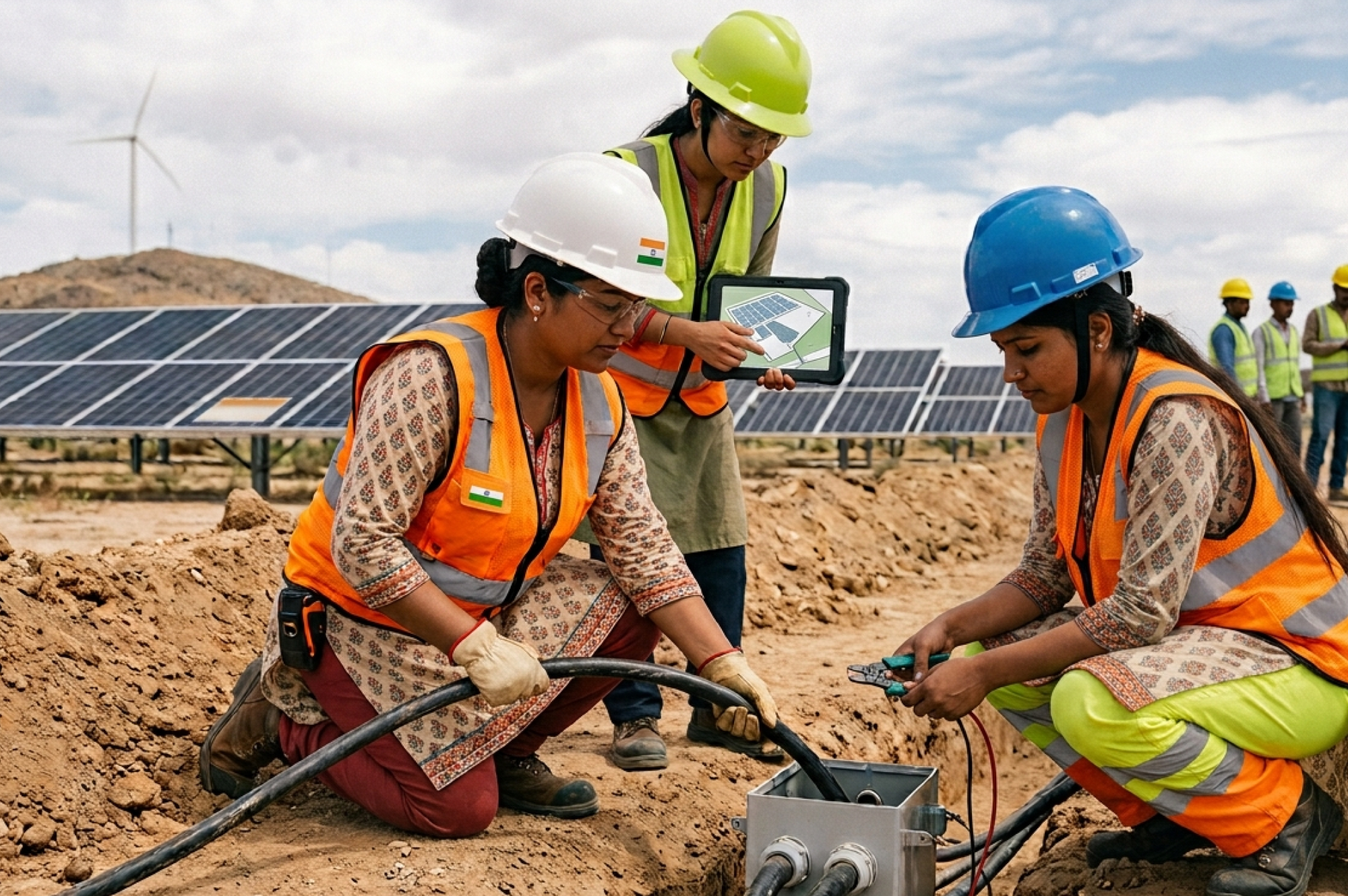
Apraava Energy is extending efforts to increase women’s participation into functions traditionally dominated by men. Women technicians who have received the necessary training and certification for working at height are undertaking preventive maintenance at solar plants and wind turbines. The company is also exploring greater participation by women in security, transport and other operational roles.
Mathew Oommen, Director Operations at Apraava Energy, pointed to technology’s potential to reduce routine physical intervention at plants. Career progression can provide another avenue for flexibility, with employees able to move into corporate functions or relocate closer to their home states over time.
However, enabling participation requires more than introducing digital tools or opening additional roles. Companies must also reconsider the assumptions underlying conventional work arrangements.
“I think it’s a design challenge, rather than a physical space challenge,” said Shilpi Lal Sharma, Head Talent, Learning & Development & DEI at JSW Group.
The observation highlights the importance of designing shifts and distributing responsibilities in ways that accommodate different employee requirements. For industrial operations, the challenge lies in translating this principle into workable arrangements across shifts without leaving critical functions understaffed.
The distinction between flexibility and remote work is particularly relevant in this context. “Work from home and flexibility are not synonymous,” said Shweta Srivastava, CHRO, Renewables at Purvah Green & RPSG Solvanta.
Where employees cannot perform their core responsibilities remotely, companies can explore other measures, such as more predictable rosters, suitable transport and accommodation, time off for personal commitments and remote completion of administrative tasks wherever feasible. Giving employees some choice over these arrangements can make site-based careers more manageable without changing the need for physical presence.
Making flexibility work within commercial constraints
For renewable energy companies, workforce policies must also reflect the economics of operating large, capital-intensive assets. Competitive tariffs and project lifecycles that can extend to 25 years leave limited room for inefficient manpower deployment, making it necessary to balance employee requirements with long-term operating costs.
Sprng Energy’s approach combines manpower utilisation with measures intended to address fatigue and attrition. The company has maintained single-digit attrition and extended the period within which employees can avail compensatory off from one month to six months. The longer window gives site personnel greater scope to use accumulated leave around their individual circumstances.
“We ensure that we have maximum utilisation of our manpower, but ensuring safety and their priorities first,” said Sayantani Basu, Head HR at Sprng Energy.
The company is also using job rotations across projects and giving regional teams greater autonomy to respond to employee needs. Such arrangements can help reconcile workforce preferences with commissioning schedules, regulatory requirements and the demands of day-to-day operations.
This balance becomes harder to maintain when projects are spread across several states. Geographic distances, varying site conditions, equipment movement and local operating requirements can all influence where employees are deployed and how responsibilities are assigned. Consequently, flexibility also depends on the ability of regional teams to make decisions within operational boundaries, rather than relying entirely on centralised staffing arrangements.
Annapurna J, CHRO at Serentica Renewables, argued for a broader approach to the issue. “Look at flexibility more from a business capability requirement rather than a demographic ask,” she said.
The perspective shifts the discussion away from treating flexibility as a special accommodation for particular groups. Instead, it positions adaptable working arrangements as part of an organisation’s ability to retain skilled employees, respond to changing requirements and build a workforce capable of sustaining operations over the long term. For India’s energy companies, the next step is to translate this approach into everyday operating practices. Digital monitoring, carefully planned shifts, employee choice and more adaptable career pathways can support a wider talent pool, but their success will depend on how effectively they are integrated into plant-level workforce planning. In an industry where reliability and safety remain non-negotiable, inclusion ultimately requires work arrangements that serve both the people operating energy assets and the businesses responsible for keeping them running.
Cookie Consent
We use cookies to personalize your experience. By continuing to visit this website you agree to our Terms & Conditions, Privacy Policy and Cookie Policy.